
The posts before, during and after an exhibition help shape how people understand your business. That applies to the company page and to the people representing it. Connecting those contributions gives the investment in an event a longer useful life.
“We’re exhibiting.” “Here’s our stand number.” “Great event. Thank you to everyone who visited.” It’s a familiar sequence on professional social media. Each post serves a purpose: people need to know where to find you, who they can meet and what will be demonstrated. Acknowledging the people who took the time to visit is perfectly reasonable, too. But companies often have considerably more to say. Months of preparation, technical development and customer discussions sit behind an exhibition appearance. When the communications mainly document attendance, much of that knowledge remains unexplored.
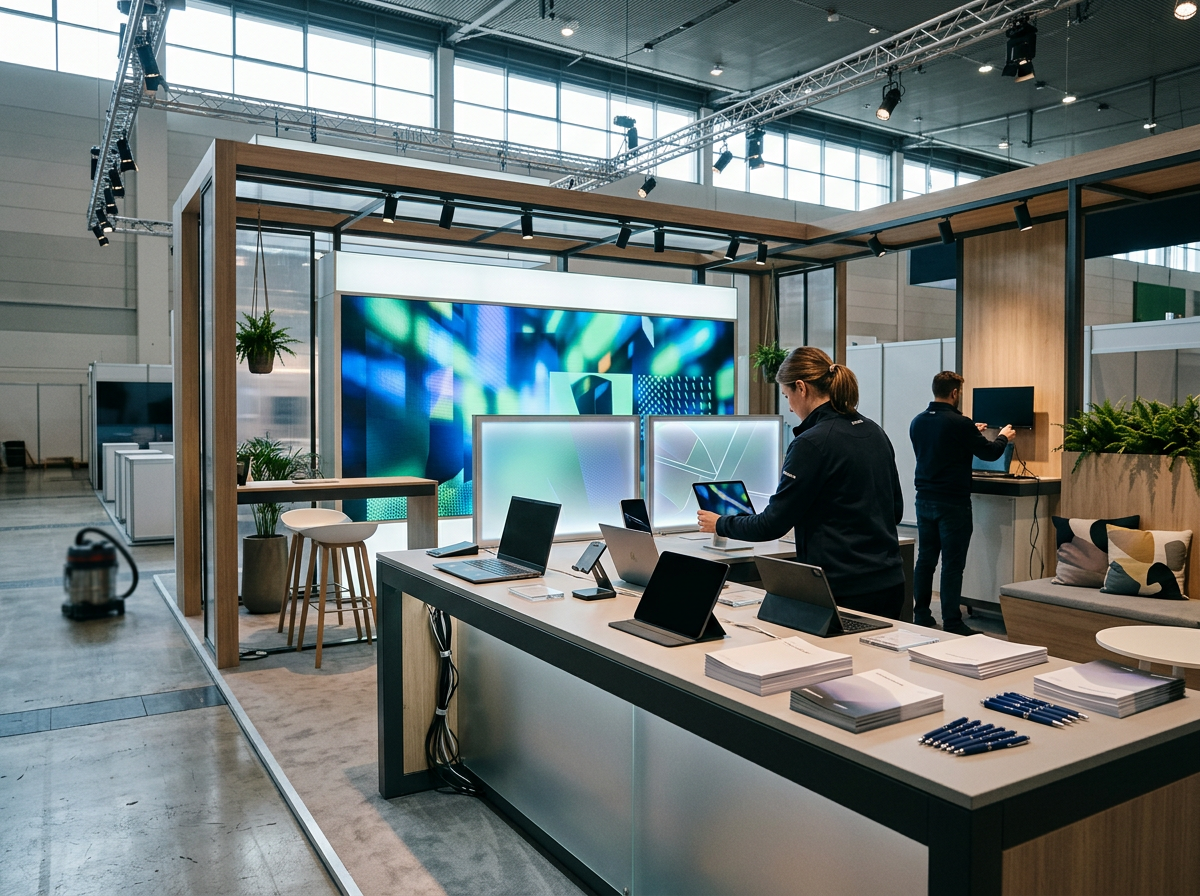
A trade show creates an opportunity to build a conversation before people arrive, give it substance when they meet and develop it afterwards. The posts themselves are part of that conversation. Together, they can help an audience understand the problem a company is addressing, its approach and the evidence supporting it. That is a practical application of Strategic Narrative Engineering: connecting individual communications so they build a clear, credible understanding of a business over time.
Before the event: explain why the conversation matters
A stand number helps someone find you. Understanding why they should make the journey requires a little more. What problem are you addressing? Who experiences it? Why is it difficult to solve, and what has changed to make a new approach possible or necessary?
These questions provide useful material well before an exhibition opens. A company demonstrating an industrial security capability, for example, could explain a particular operational challenge, explore the limitations of existing approaches and introduce what visitors will be able to examine at the show.
The subject develops across those contributions. Each gives people another reason to take an interest and another piece of information with which to assess the company’s expertise. It also creates room for a response. Someone may recognise the problem, question an assumption or describe a requirement the company had not considered. By the time they arrive at the stand, a useful conversation may already be under way. People who cannot attend benefit as well. They can follow the thinking and contribute without needing to be in the exhibition hall.
During the event: connect the explanation with the experience
An exhibition brings technology and the people behind it together. Visitors can see something working, ask questions and examine how an approach might apply to their own circumstances. Communications during the event can extend that experience. A demonstration can illustrate a capability introduced beforehand. An engineer can explain a design decision. A discussion can reveal a question worth exploring in more detail.
Photographs and short videos become more useful when they carry some of that information. What is happening in the demonstration? What does it establish? Why might someone working in this field care? Care with evidence matters here. A successful demonstration supports a claim about what was shown under particular conditions. Wider claims about deployment, performance or commercial value require appropriate support of their own. Clear explanations help people judge the significance of what they are seeing.
The event also offers a chance to listen. Questions from visitors can reveal where an explanation needs work, which applications attract interest and what potential customers need to know next.
Afterwards: give the conversation somewhere to go
The end of the exhibition is often the point at which the most useful follow-up material becomes apparent. A question raised repeatedly deserves a proper answer. A technical discussion may benefit from a more detailed explanation. Someone assessing an application may need documented results, implementation information or an approved customer case study. Publishing that material helps people continue their evaluation. It also gives visitors something useful to share with colleagues who were not at the meeting and helps those who followed from a distance understand what emerged.
There is value in discussing what the company learned, too. Did conversations reveal a new requirement? Did a recurring concern change how the team explains its approach? What still needs investigation? This is how a narrative develops credibility: through relevant information, evidence and a willingness to respond. A thank-you post acknowledges the occasion; the work that follows helps build understanding.
Your professional account contributes to the company’s narrative
A company’s communications extend beyond its official channels. People encounter the business through the professional accounts of its engineers, sales teams, executives and other specialists. When an individual posts about representing the company at an event, that contribution helps shape how the business is understood. The account belongs to the person, but the expertise, products and activities discussed connect it to the company. That brings both an opportunity and a share of responsibility.
“We had a great time” describes an experience. Explaining why the company participated, what was demonstrated or which questions prompted the most interesting discussions gives the audience insight into the business. Different people can contribute different knowledge. An engineer can discuss a technical challenge. A sales colleague can explain a recurring customer concern without revealing confidential details. A director can describe why a particular development matters to the company’s direction.
Their value lies partly in those distinct perspectives and individual voices. A feed full of identical corporate paragraphs adds little understanding. People need enough shared context to explain the purpose of the company’s participation, then room to contribute from their own experience.
Helping colleagues understand the narrative is therefore part of preparing for the event. Alongside knowing what will be demonstrated and who will attend, they should understand why the company is there and what it hopes people will take away.
Where Strategic Narrative Engineering helps
Strategic Narrative Engineering starts with what a business needs its audiences to understand and examines how its communications can establish and support that understanding.
For an exhibition, this means identifying the central narrative and the related topics that give it substance: the customer problem, the technical approach, the practical application and the supporting evidence. These topics can connect activity across social posts, website content, technical explanations, interviews and follow-up material. Each contribution has its own purpose while helping people build a fuller picture.
At Krowne, our Narrative Gap Analysis provides a way to examine the distance between what a company wants to be understood for and what its available communications actually convey. Applied to event communications, that can raise useful questions. Is important expertise visible? Can people find evidence behind the claims? Do contributions from the company and its representatives reinforce a recognisable direction? Does the material help someone understand the business after the initial encounter?
The answers help determine what needs explaining before the show, what can be demonstrated during it and what should be substantiated afterwards.
AI needs a purpose beyond producing the next post
AI can help organise technical material, identify connections and develop explanations for different audiences. It can also help turn questions raised during an event into material for further discussion. Its usefulness depends on the knowledge supplied, the judgement applied and the purpose of the communication. A brief to announce attendance will produce an attendance announcement. A clearer brief, supported by subject expertise and evidence, gives it something more valuable to work with.
The responsibility for accuracy, relevance and direction remains with the people communicating. Producing more posts does not, by itself, create a coherent narrative. A company may spend months preparing what it will demonstrate over a few days. Its people bring knowledge to the event, visitors bring questions, and the discussions create further opportunities to explain and learn.
There is enough there to sustain a conversation well beyond “thank you to everyone who visited”. The stand will comes down, but the understanding built around it should continue to grow.

