
This is the end
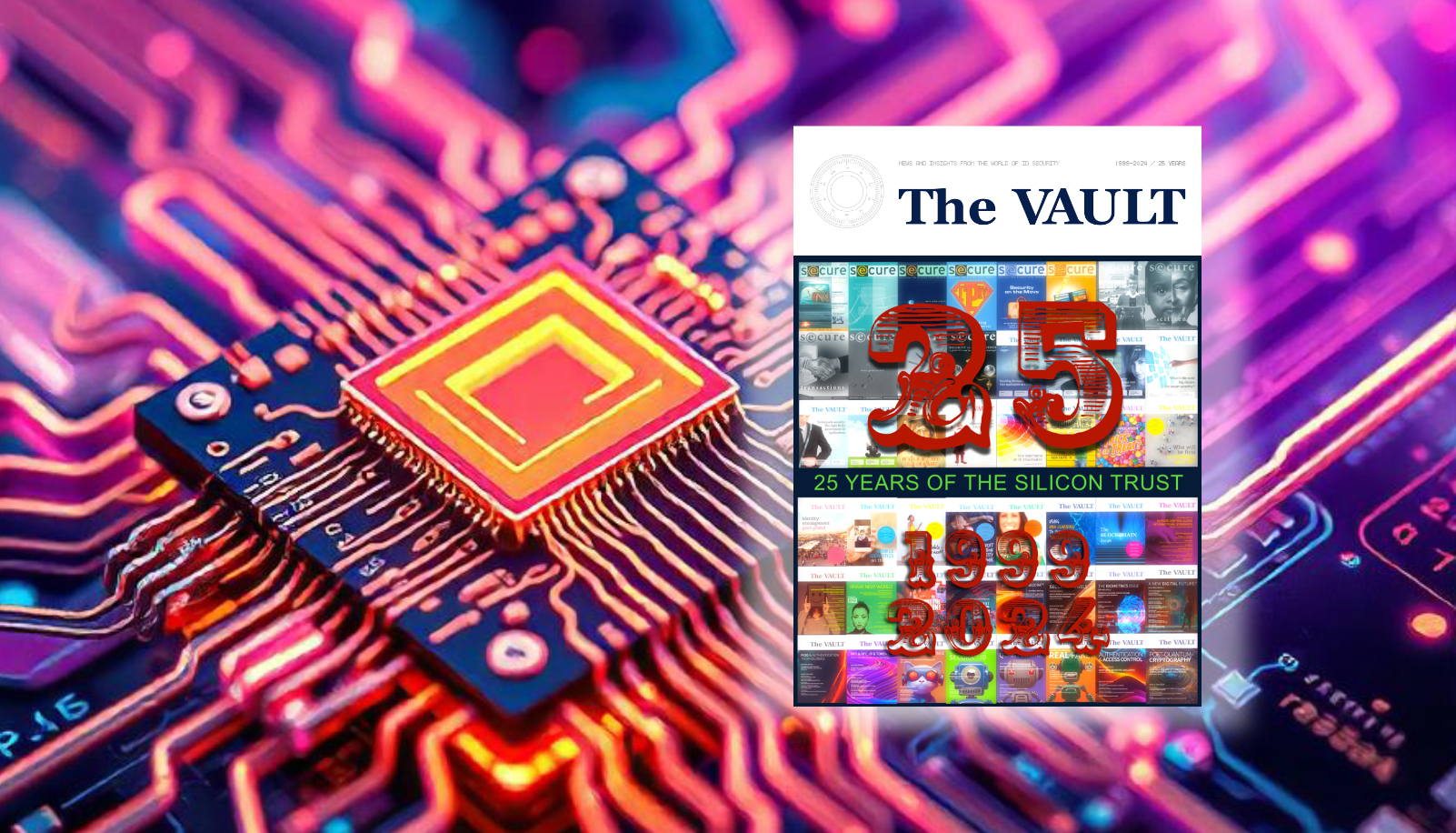
It’s a little dramatic to begin this final editorial in such a way but hey, Adele started it (opening lyrics to Skyfall) and it does seem appropriate at this time of writing. The fact is – it’s true. This is the final issue of the VAULT magazine as it celebrates 25 years. However, it also marks the end of the Silicon Trust Partner Program (to give it its full title).
Why is the program closing down you ask? Well, many reasons, but predominantly it has outlived its usefulness and perceived return on investment to the partners. I cannot blame them – its inception belongs to a time in the industry over a quarter of a century ago that was very, very, different to now.
When we started, no small start-up or mid growth company could afford to compete with the networking and marketing opportunities that existed for the large-scale corporations at the time. The cost of full-scale marketing and promotion was prohibitive and limited resources better spent on new product and technology development. The program offered a way to create credibility by association across different companies and create a push/pull strategy by encouraging end customers to see the benefit of the new technologies on offer and endorsed by a third- party program. But always with hardware-based technology as a starting point for secure applications.
At the start of the program the newest technology we covered was Biometrics. The first product we highlighted was a biometric fingerprint sensor from Infineon (or Siemens Semiconductor as was). The possibilities for this technology seemed endless and we were not above forecasting how these technologies could be incorporated into everyday products.
I, for one, remember vividly, a conversation held at dinner during one CARTES event in Paris in the early days, between Thomas Rosteck, Veronica Preysing and Mark Stafford of Infineon and myself, where we fantasized about the possibility of having a separate biometric sensor installed into the future series of Nokia phones. Little did we know that only ten years later (in 2012) Apple’s iPhone 5 would use a biometric sensor in the screen and only five years after that, facial recognition would be installed as a standard security protocol – inconceivable at the time. Sorry Nokia – no-one foresaw Apple taking over your market space.
And that’s how it continued. One new technology after another; 32 Bit Secure Controllers, PKI, external secure dongles, Trusted Platform Modules, cyber-security systems, contactless technology, Near Field Communication, IoT, Blockchain, Non-Fungible Tokens, Artificial Intelligence, Quantum Computing, Post-Quantum Cryptography, and so on.
And the markets grew. First with secure documents, ePassports, eID cards, mobile driving licenses and then on to contactless payments, contactless ticketing, border management, and secure access control. The list and opportunities were endless.
The original SECURE Magazine evolved into the VAULT magazine after 15 issues and one rebrand of the program, and continued as the VAULT for the next 40 issues. During this time the program brought out whitepapers, application briefs, geographical specials, video interviews and even a short stint as Security-News TV. Not to mention the numerous product seminars and meeting held over the last couple of decades both in-person and on-line.
Today the situation is very different. Amalgamations and merges have seen small companies pulled into bigger ones. Large companies in the industry became giants and even some of those giants are now starting to divest themselves of their security divisions and business units.
While we continue to see this sea of change in the players and infrastructure within the industry, we have also witnessed the now incredible plethora of available online tools, allowing even the smallest of companies to market their technologies, products and solutions by themselves. Social media, video platforms, networking sites, online analytics, Artificial Intelligence tools – all contribute to bring the promise of market penetration and customer awareness well within the grasp of smaller companies who are looking to go it alone, on their own terms.
Put simply – the Silicon Trust Partner Program, while invaluable in its time, has today a less viable argument for what it can offer as a network. Time and technology will catch up to all of us eventually.
More importantly however, this journey was not made alone. The support and contributions from a number of key partners over the last 25 years have made this experience a little smoother than it would have been otherwise. I would like to single a few of these people out; from Infineon – Ulrich Hamann, Rainer Bergmann, Thomas Rosteck, Ioannis Kabitoglou, Anton Müller, Ursula Schilling, Markus Moesenbacher, Chris Shire, Karin Grassmann, Stefanie Eisele, Camille Gasnier, Florence Raguet, Robert Bach, Dr Peter Laackmann, Markus Janke & Detlef Houdeau. Some of these individuals still work at Infineon, others have moved on, some have even retired – but we wanted to acknowledge their contributions none-the-less.
From our partner side there are Oliver Winzenried, Marcellus Buchheit, Daniela Previtali, Klaus Schmeh, Markus Hoffmeister, Adam Ross, Benjamin Drisch, Dirk Melzer, Susanne Timm, Dr. Hans Hanauer, Lutz Richter, Katharina Schuldt and Dr. Joseph Atick. A big thank you goes out to them for their contributions over the years.
There are, of course, many, many more individuals who have contributed to the program during its time in existance. More than could be mentioned here in this editorial. You know who you are. We know who you are. And so, thank you.
In this anniversary issue, we have looked back through our archives and brought back some articles that were considered fundamental at the time. The issue is divided into three parts; Technology Over Time, Application Evolution and Market Maturity.
We have republished our first guest opinion piece from Ulrich Hamann, talking about the need for hardware-based security, that created the direction for the program. The interview with Intel’s security architect David Grawrock explaining TPM and why the TCPA was so important, back in the early 2000’s. As was the first time we asked about the growing markets for eHealth cards or looked towards secure travel with ePassports and eID documents. We announced the arrival of NFC and contactless technology, of Blockchain and NFT’s, and of the need during, and after, the COVID pandemic for biometric contactless payment cards. We even took a moment (back in 2015), to ask about the current security trends in the semiconductor industry. Just in case our readers thought we were veering too far towards software-based secured solutions and away from hardware-based secured ones.
I was recently told that ‘No-one cares about what has happened in the past’. This is certainly a view that many newcomers to the industry embrace. Looking at technology, applications and markets even just five years ago seems almost anachronistic to these individuals, and they may indeed have a point. After all, this is an industry that must, above all else, strive to move forward (if only to stay one step ahead of potential security hacks). But this issue isn’t for them. It’s for those of us who are now at a point where we can afford to take a moment and see how far we’ve come.
Just in case though, we have also republished more recent articles looking at AI and PQC – just to keep it within the all-important five-year timeframe. And furthermore, we have two brand new contributions to this issue. Our last guest opinion by Wibu- Systems’ Oliver Winzeried and a final look at a topic that became one of our focus markets: Smart Travel (courtesy of Mühlbauer’s Katharina Schuldt). Thereby covering the triumvirate of past, present and future.
Before I end though, this editorial would be incomplete if I did not acknowledge the amount of work done by those behind the scenes. Those Krowne Communications members who over the years have also contributed to the program, either in an editorial and publishing capacity or through partner management and event facilitation. Some no longer work at Krowne, having moved on in their career many years ago, other are still around. For their creative services, I would like to acknowledge Wendy Atkins, Stefan Gassner, Andreas Speck, Lana Petersen and Nina Eggemann. On the program management side, I would like to thanks Karen Brindley, Nicole Mountain, Contance Rogg, Veronica Preysing, and Yvonne Runge. These people have been the powerhouse behind the program; keeping it on course from the very beginning. Without their focus and patience, the program would not have lasted as long as it did.
The website continues to pull in an impressive number of visitors and so we will keep our online presence alive for 2025. Should anyone have news or articles that they would like to share online, please feel free to submit them and we will be happy to post them up and let them ripple through our network platforms. You’re welcome.
And so, as they say, we have reached the end.
Thanks for sticking around.
It was fun.
Steve Atkins
 K R O W N E